
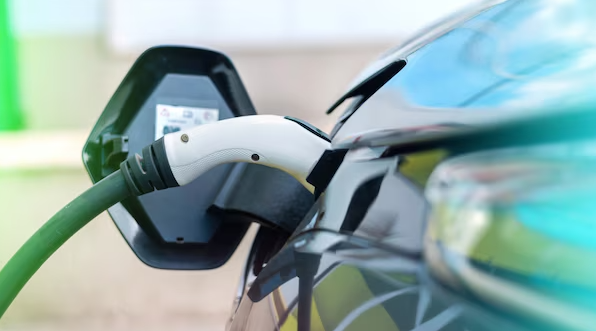
Recently, we’ve seen many posts and comments online claiming that electric vehicles (EVs) pollute more than petrol cars. These claims often focus on battery production, mining for raw materials, or the fact that electricity is not always produced from renewable sources. Because these arguments sound technical and confident, they can seem convincing at first glance.
This issue matters far beyond car owners. Transport is one of the largest sources of greenhouse gas emissions in Europe, so understanding whether EVs actually reduce pollution is important for climate policy, public health, and everyday decision-making. As youth fact-checkers, we wanted to look at the full evidence instead of relying on partial or viral arguments.
We fact-checked this claim because it is widely used to discredit environmental policies and the transition to cleaner transport. It is often shared without context, suggesting that electric vehicles are pointless or even harmful. We wanted to understand whether this claim holds up when pollution is measured properly and over time.
The claim that electric vehicles pollute more than petrol cars is misleading. It is true that producing an electric vehicle—especially the battery—usually causes higher emissions at the manufacturing stage compared to producing a petrol car. Battery production requires energy and raw materials such as lithium, cobalt, and nickel, which have environmental impacts.
However, pollution does not stop at the factory. When scientists assess vehicles, they usually use a life-cycle analysis, which includes production, use, and disposal. When the full life cycle is considered, electric vehicles generally produce lower total greenhouse gas emissions than petrol cars. This is mainly because EVs have no tailpipe emissions and convert energy into movement more efficiently.
Studies consistently show that, over their lifetime, EVs emit less carbon dioxide than petrol cars in most countries, including those with electricity grids that still rely partly on fossil fuels. As electricity production becomes cleaner, the environmental advantage of EVs increases even further. In contrast, petrol cars continue to emit carbon dioxide and air pollutants every time they are driven.
That said, electric vehicles are not impact-free. Improving battery recycling, reducing emissions from mining, and expanding renewable energy are all necessary. But the evidence does not support the claim that EVs are worse for the environment overall. The problem is not electric vehicles themselves, but how quickly energy systems and production methods are improved.
We learned that environmental claims can be misleading when they focus on only one part of a much bigger picture. Looking only at battery production ignores what happens during years of driving. This fact-check helped us understand why complex issues like climate change need careful analysis, not simple slogans. It also showed us how selective facts can be used to argue against real solutions.
Sources:
- European Environment Agency. (2024). Electric vehicles and the environment. https://www.eea.europa.eu
- Hawkins, T. R., Singh, B., Majeau-Bettez, G., & Strømman, A. H. (2013). Comparative environmental life cycle assessment of conventional and electric vehicles. Journal of Industrial Ecology, 17(1), 53–64. https://doi.org/10.1111/j.1530-9290.2012.00532.x
- International Energy Agency. (2023). Global EV outlook. https://www.iea.org
- Transport & Environment. (2022). How clean are electric cars?. https://www.transportenvironment.org
- World Economic Forum. (2023). Electric vehicles and climate impact. https://www.weforum.org